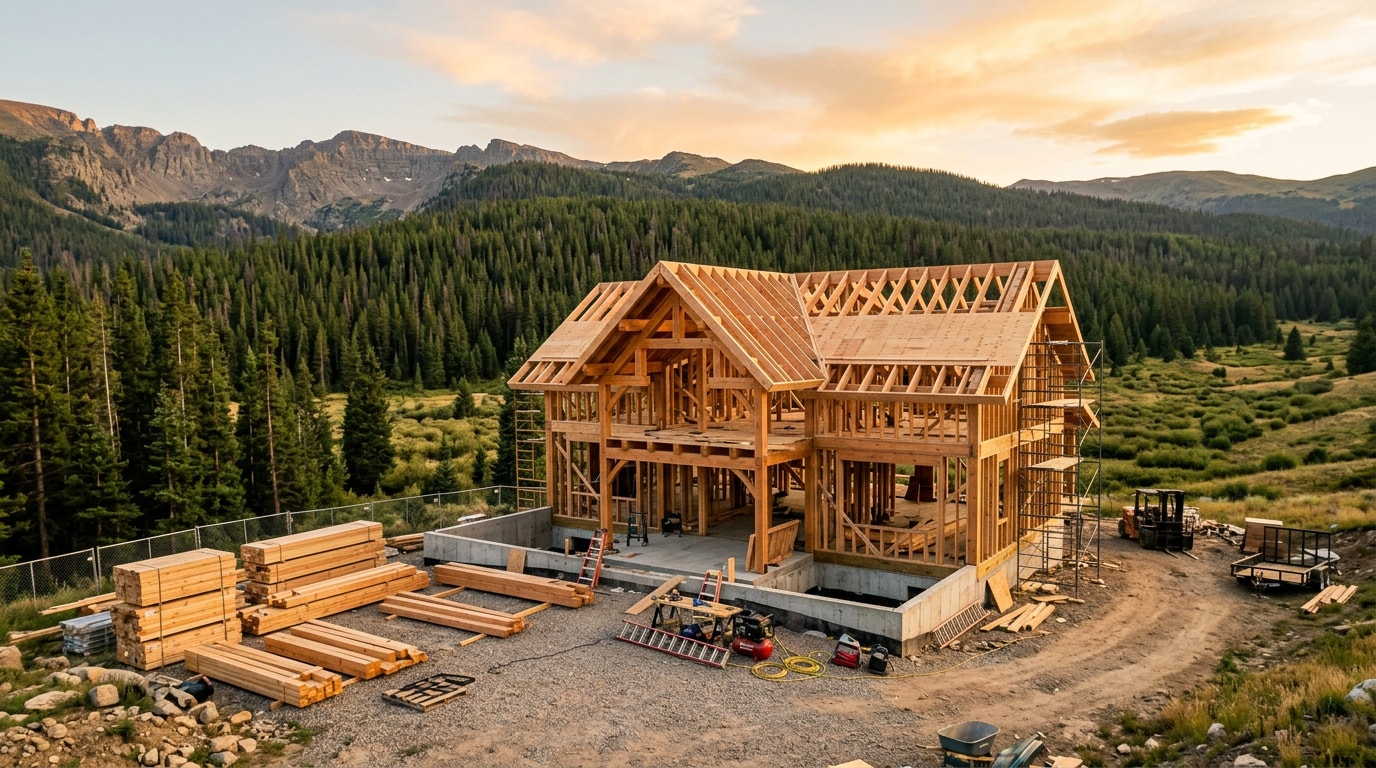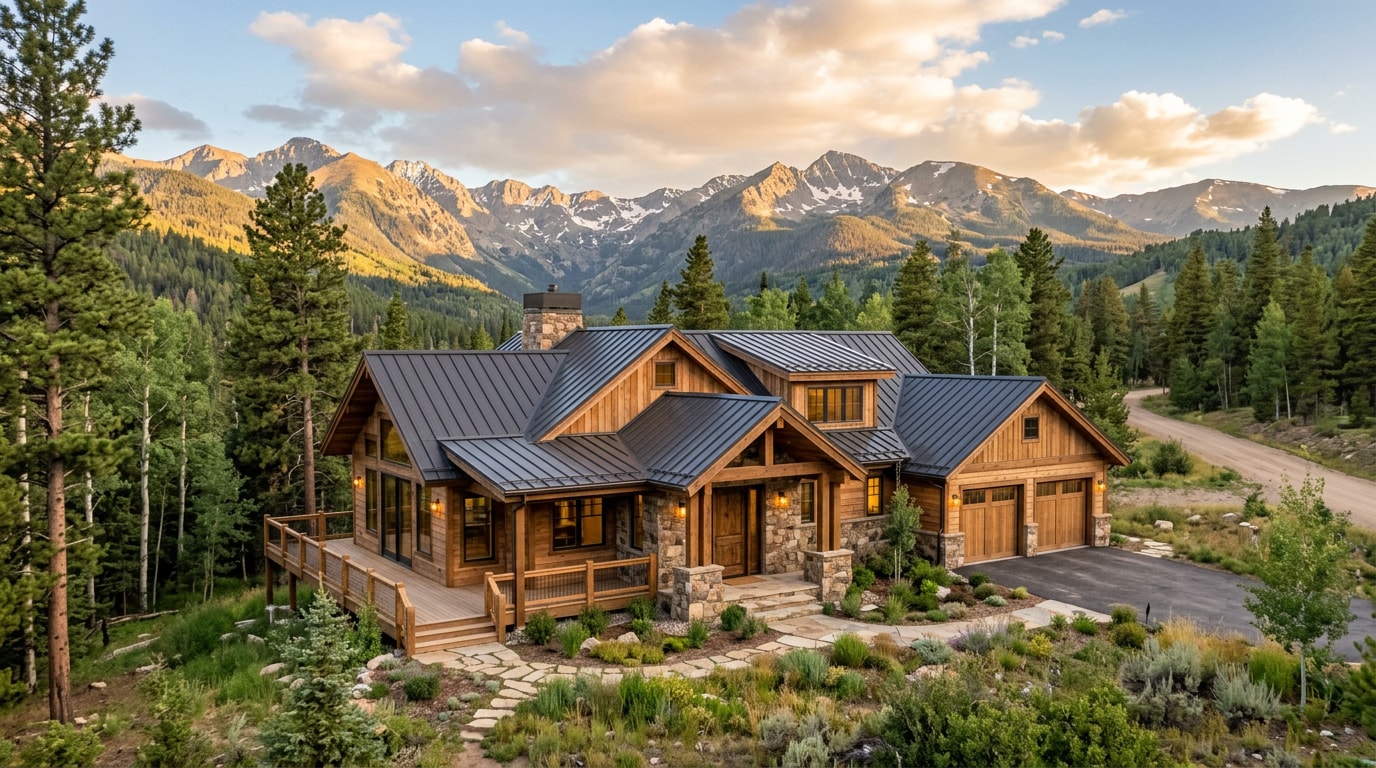
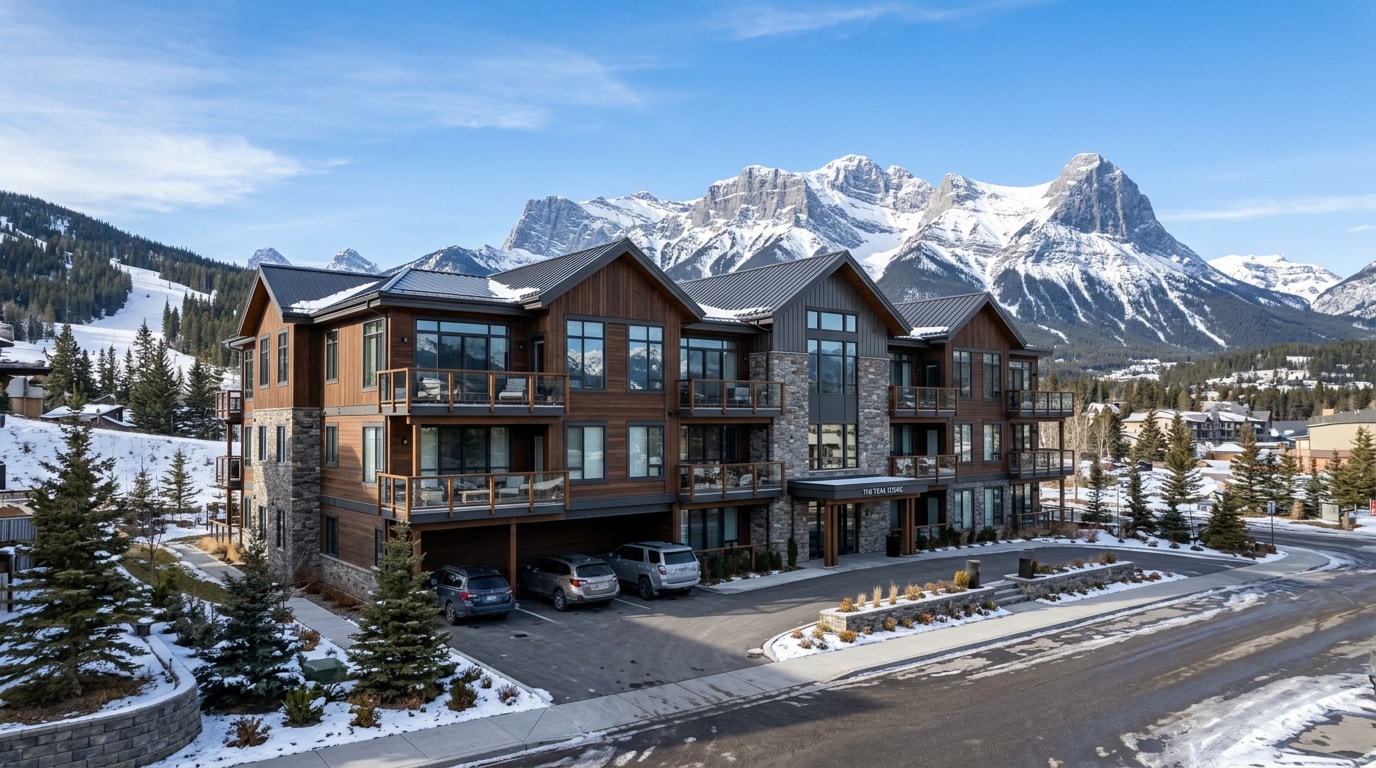
Apartment construction companies in Pagosa Springs, CO are harder to find than the demand suggests, and the county's own permit records show why: multifamily permits here run in the single digits most years. That scarcity is exactly why vetting the few qualified multifamily builders matters more than it would in a bigger metro market. Here's what separates a contractor who can actually push a multi-unit project through Archuleta County review from one who has only ever framed single-family homes.
What an Apartment Construction Company Actually Builds
Multifamily construction covers any housing structure designed to hold more than one separate household under a single roof or site plan, from a duplex to a 40-unit complex. An apartment construction company manages everything from site prep through final inspection on these projects, which is a different scope than a typical single-family home builder handles.
In Archuleta County, demand for this kind of building has grown alongside tourism, remote work, and a housing shortage that has pushed local rents past what many wages support. That demand spans a wide range of project types, from duplexes and townhome clusters up through larger apartment buildings. A contractor working in this market needs to understand both ends of that spectrum, since lot size, zoning, and infrastructure access usually decide which option actually pencils out financially.
Anyone starting this process should look at a builder's actual multifamily and commercial track record, not just their home-building portfolio, before reaching out. You can review our company's project history as one example of what that track record should look like.
Archuleta County Multifamily Permits: The Real Numbers
This is the part most guides skip, and it's the single most useful data point for anyone planning an apartment project here: Archuleta County's own cumulative permit summaries show commercial permit counts holding fairly steady year over year, while duplex and multifamily permits stay scarce. The county issued 8 commercial permits and zero duplex permits in 2025, following 13 commercial permits and zero duplex permits in 2024. Combined, that's a small handful of multi-unit permits across the whole county in back-to-back years.
Zoom out further and the pattern holds. Duplex and multifamily permits combined have totaled roughly four over the 2021-2025 window, compared to well over 100 single-family house permits issued in most of those same years. That's not a reason to avoid building here. It's a reason to pick a contractor who has actually been through the commercial plan review process before, because most local builders simply haven't.
The process itself has gotten stricter recently, too. As of 2025, applicants for new building permits are required to provide proof of payment for Pagosa Fire Protection District impact fees, or documentation confirming no fee is required, before submitting their application, a change designed to prevent delays. Skip that step and your permit application gets bounced before a plan reviewer even looks at it.
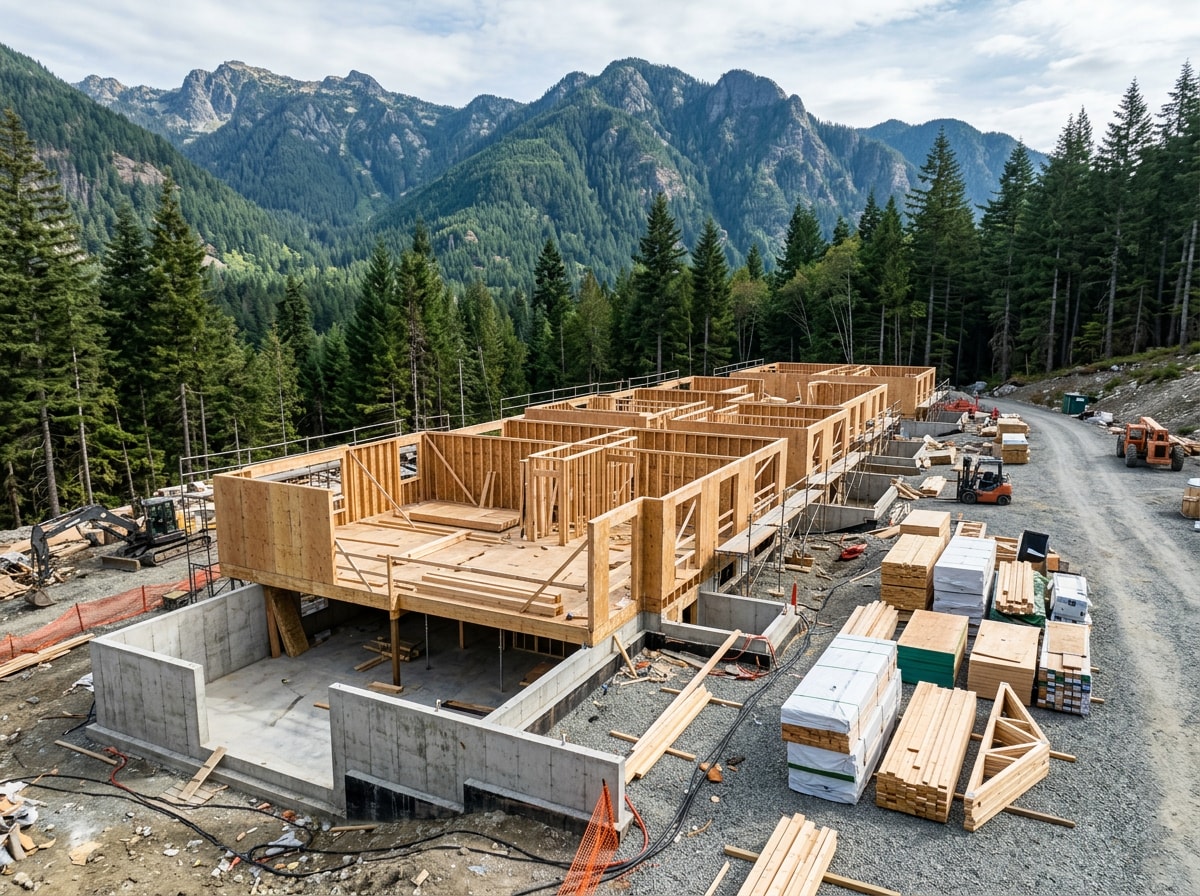
See which neighborhoods and lots are realistic for multifamily development on our Pagosa Springs service area page.
Building Codes, Snow Loads & Wildfire Rules for Multifamily Projects
Commercial and multi-unit plans in Archuleta County get reviewed against a specific code set, and the county currently enforces the 2015 International Residential Code for one- and two-family dwellings, the 2015 International Building Code (except appendices), the 2015 International Energy Conservation Code, the 2009 International Fire Code (except appendices), the 2018 International Plumbing Code, and the 2020 National Electric Code . There's no flexibility on who can prepare those drawings, either: all drawings for a commercial project must be completed by a Colorado-licensed architect or engineer, with no exceptions.
Snow load is a real engineering constraint here, not boilerplate language. Roof and structural design has to account for accumulation typical of the San Juan Mountains, and an under-designed roof is a liability nobody wants to discover in February. Site work also tends to run heavier than flatter markets expect, which is why grading, drainage, and utility work usually need to be scoped before the structural design is finalized. Our grading and excavation and site preparation teams typically get involved at this stage, alongside land clearing on wooded lots.
Wildfire exposure adds another layer. Colorado adopted a statewide wildfire standard that affects new construction across much of the mountain west: in 2023, Colorado Senate Bill 23-166 established a Wildfire Resiliency Code Board, and on July 1, 2025, the state adopted the 2025 Colorado Wildfire Resiliency Code, which sets minimum standards for structure hardening and defensible space in mapped wildland-urban interface zones. Whether that code applies to a specific parcel depends on its mapped fire-intensity classification, so confirming WUI status early saves a redesign later.
Multi-unit sites not on municipal sewer also need a wastewater plan before permitting can move forward, and that's typically a drain field installation scoped alongside the site plan, not bolted on afterward.
General Contractor vs. Builder vs. Project Manager
These titles get used loosely in casual conversation, but they're not interchangeable when you're signing a contract.
| Role | Typical Scope | Who Holds the Risk |
|---|---|---|
| Builder | Often residential-focused; may self-perform some trades | Varies; sometimes shared with owner |
| General Contractor | Licensed for commercial/multi-unit scale; coordinates all trades, carries the schedule | GC holds the contracts and most of the risk |
| Project Manager | Oversees budget and timeline on the owner's behalf | Owner retains risk; PM rarely holds trade contracts |
A multifamily general contractor takes approved plans and turns them into a finished, occupiable building. That means coordinating every trade on-site, managing the schedule, and carrying day-to-day oversight so the owner isn't the one chasing subcontractors. An apartment construction company that handles this role well is effectively the single point of accountability for the whole build. Browse our general contractor services to see how that accountability plays out on real projects.
What It Costs and How Long It Takes to Build Apartments in Southwest Colorado
Mountain-market apartment costs depend heavily on site conditions, not just square footage. Steep lots, utility extensions, and snow-load-rated structural design all push costs above what similar projects run in flatter metro markets, and material delivery costs climb the farther a site sits from a distribution hub.
Timelines run longer than most people expect, too, and that's true nationally, not just in Colorado. According to the Census Bureau's 2025 Survey of Construction, it took an average of 18.9 months from permit authorization to completion for a multifamily building nationally, about 0.7 months shorter than in 2024.
Larger buildings take longer: projects with 20 or more units averaged 21.7 months from authorization to completion in 2025. Add Archuleta County's slower commercial plan review into that baseline and a realistic mountain-market multifamily timeline often runs longer still.
Most developers don't pay for this out of pocket. Multifamily projects are typically financed through construction loans structured to release funds in draws as milestones are completed, and lenders usually require a vetted GC and a detailed cost breakdown before approving that kind of financing. That's one more reason hiring an experienced local contractor early in the process pays off, not after the lot is already under contract.
Questions to Ask Before Hiring a Construction Company
Before signing with any apartment construction company, run through this list:
- Have you pulled Archuleta County commercial permits before, and can you name the project?
- Are you licensed and bonded for commercial-scale work, not just residential?
- Who handles the architect/engineer stamping requirement, and is that cost already in the bid?
- How do you handle change orders when site conditions differ from the soil report?
- Who is my direct point of contact during construction, and how often will I get updates?
- Have you built in a mapped wildland-urban interface zone before?
- What's your realistic timeline from permit submission to first inspection?
Communication style matters as much as price here. Multifamily projects tend to hit more unexpected site conditions than single-family builds, so don't skip the reference calls. Once you've narrowed your short list, request a free estimate and ask these questions directly.
Why Local Experience Still Wins on Mountain Multifamily Projects
Builders who haven't worked in mountain construction before often underestimate utility extension costs, snow-load engineering, and how long Archuleta County's commercial review actually takes. That gap shows up as change orders and schedule slips, not on the original bid.
At Whispering Pines Company, we take our commercial construction projects just as seriously as our custom home builds , and we've been doing it long enough to know where mountain-market projects typically go sideways. The company has been building in Pagosa Springs since 1980 , with work that spans Pagosa Springs, Bayfield, Durango, South Fork, Ignacio, and Chama, NM . If your project sits in Bayfield or South Fork, the same crews and the same commercial-review experience apply.
That range matters because multifamily sites don't always fit a wood-frame template. Some projects pencil out better as commercial steel buildings, particularly on larger footprints where structural steel shortens the framing schedule. Our steel building contractor team and our custom home construction crews work from the same site-prep and permitting process described above, so there's no handoff gap between disciplines.
If you're comparing bids, start with a conversation, not a spreadsheet. Visit {{SITE_URL}} to see full service details, or go straight to our contact page to get a free estimate on your project.
FAQ
What is a multifamily contractor?
A multifamily contractor is a licensed builder specializing in structures that house multiple separate units, such as apartments, townhomes, or condo buildings. This differs from single-family home builders in scope, code requirements, and project management complexity.
How much does it cost to build an apartment complex?
Cost depends heavily on site conditions, unit count, and finish level, and figures vary widely by region. In a mountain market like Pagosa Springs, snow-load-rated structural design and utility extensions typically push costs above what comparable projects cost in flatter metro areas, so get a site-specific estimate rather than relying on a national average.
How long does it take to build an apartment complex?
Nationally, it took an average of 18.9 months from permit authorization to completion for a multifamily building in 2025, per the Census Bureau's Survey of Construction. Archuleta County's commercial plan review process can add time on top of that baseline, so budget for a longer timeline than a single-family build.
Do you need a special permit to build an apartment in Colorado?
Yes. Archuleta County requires commercial plan review for any multi-unit structure, and all drawings for a commercial project must be completed by a Colorado-licensed architect or engineer, with no exceptions. Projects in a mapped wildland-urban interface zone may also need to meet Colorado's 2025 Wildfire Resiliency Code.
What's the difference between a general contractor and a builder?
The distinction usually comes down to scale and licensing. A general contractor is licensed and equipped for larger, commercial-scale jobs like apartment complexes and holds the trade contracts and most of the project risk, while "builder" more often implies residential-focused work.