Hiring concrete demolition contractors in South Fork, CO starts with one question: does your slab need full removal, or just a repair? That answer changes your budget, your timeline, and which crew you call. Here's what actually drives cost, how the work gets done, and what to check before you sign a contract.
Repair or Remove? How to Tell Which Your Slab Needs
Not every cracked slab needs a jackhammer. Small surface cracks, minor chips, or a single settled corner can often be fixed with resurfacing or mudjacking instead of a full tear-out.
Some signs point straight to removal instead:
- Large, spreading cracks that keep widening year over year
- A heaving or sinking slab section
- Water pooling against your foundation instead of draining away
- Trip hazards where sections have shifted unevenly
A slab that's structurally failing, not just cosmetically flawed, almost always costs more to patch repeatedly than to remove and replace once. South Fork sits in a high-elevation valley with a short building season and hard freeze-thaw cycles every winter. Those cycles tend to widen existing cracks rather than let them stay stable, which is worth weighing before you commit to another round of patching.
What Does Concrete Removal Cost in South Fork, CO?
Cost is usually the first real question once repair is off the table. Two things swing the price most: how hard the job is to access, and what type of structure you're removing.
What Drives the Price Up or Down
National per-square-foot pricing for concrete removal commonly lands in the low-to-mid single digits per square foot, with the final number shaped by three factors: labor intensity, reinforcement, and permitting.
Hand-breaking a slab in a tight backyard costs far more per square foot than a machine-accessible driveway, simply because labor hours replace equipment efficiency. Reinforced slabs, those with embedded rebar or wire mesh, also run higher, since crews need extra time to cut and extract metal before hauling debris. Permit fees add another variable, and they vary by jurisdiction, so confirming the local fee schedule before you budget saves a surprise later.
In a rural mountain market like the San Luis Valley, pricing can run a bit higher than urban national averages despite lower labor rates. The main reason is longer hauling distances to the nearest landfill or recycling facility, plus more limited equipment availability. It's worth asking local contractors directly rather than assuming national averages apply to your property. Rio Grande County's building department follows the International Residential Code for construction, alteration, and demolition work, and provides a permit packet explaining the process from application to final inspection , which is a useful reference before you lock in a budget.
Cost by Project Type (Driveway vs. Patio vs. Slab)
Driveways and patios are the two most common residential removal jobs, and their price ranges differ mainly because of thickness and reinforcement.
- Driveway removal typically runs higher per square foot, since driveways are often poured thicker and may include rebar to handle vehicle weight.
- Patio removal tends to sit at the lower end of the range, especially for older, unreinforced slabs.
- Interior or utility slab removal (like an old shed pad) falls somewhere in between, depending on equipment access.
These are ballpark figures, not fixed quotes. Actual pricing depends on your property's layout and the contractor's equipment. If you're planning a larger project around the removal, our site preparation services page covers how slab demolition fits into a full build-ready lot.
Ready to compare real numbers for your property? Get a free estimate before you commit to a scope.
How Professional Crews Actually Demolish and Remove Concrete
Most professional jobs follow a consistent sequence.
- The crew checks for buried utility lines to avoid hitting gas, water, or electrical before any breaking starts.
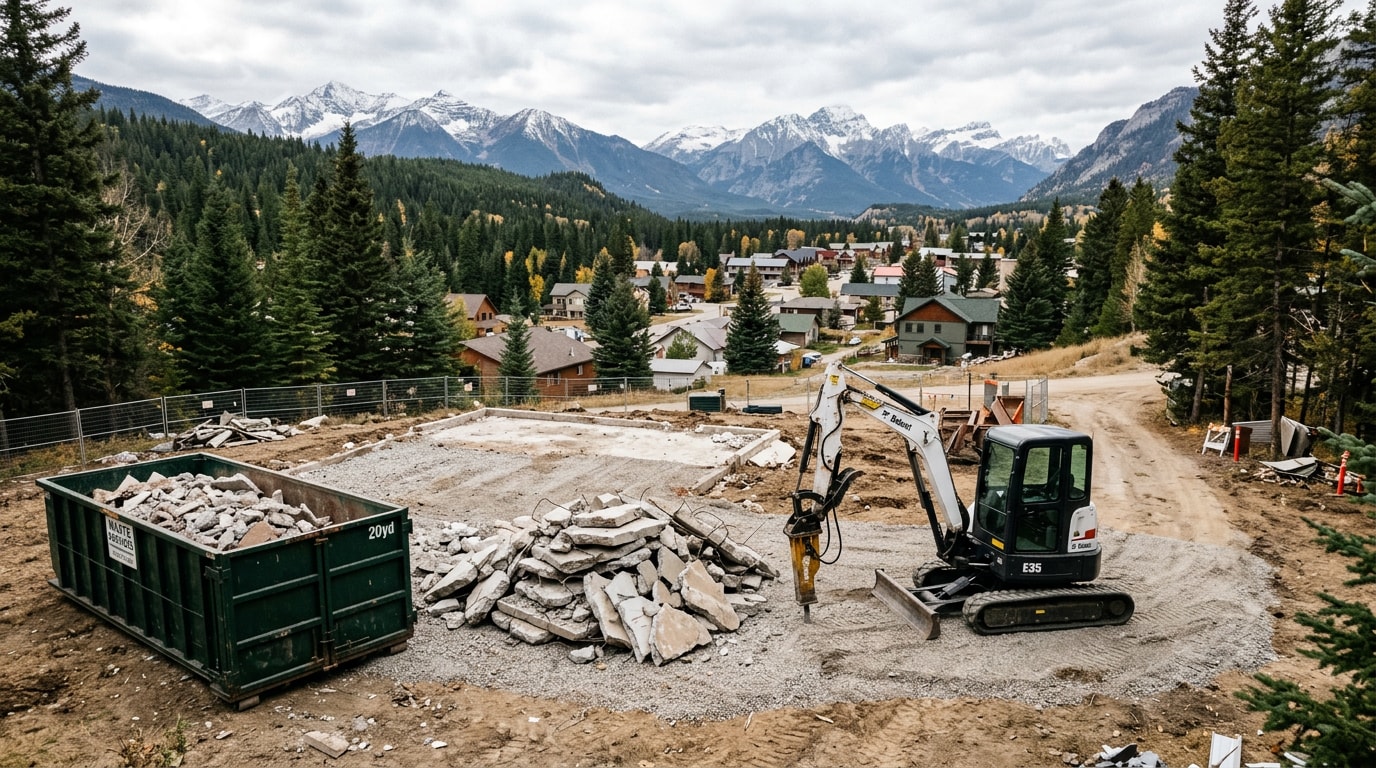
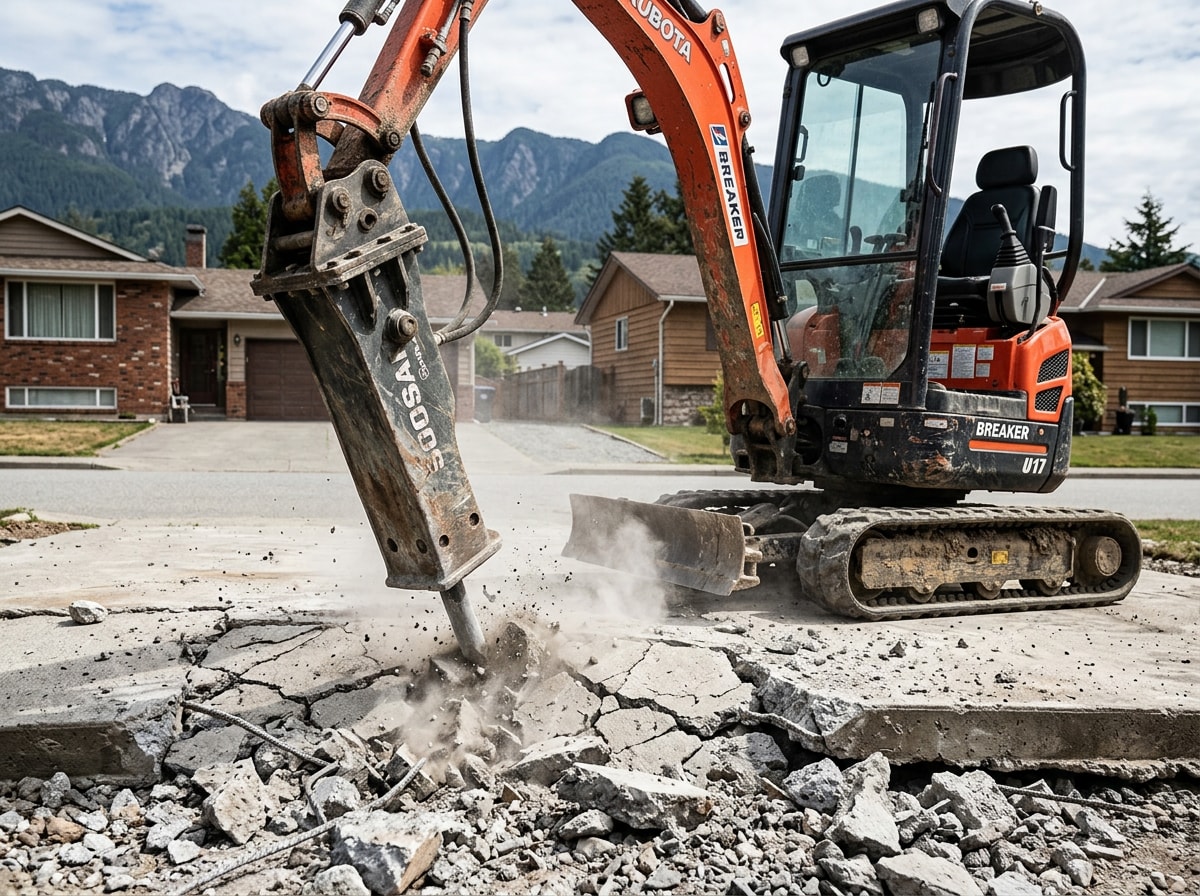
- Demolition begins, usually with a skid-steer or mini-excavator fitted with a hydraulic breaker for larger slabs, or a jackhammer for tighter spaces where machinery can't maneuver.
- Once the slab is broken into manageable pieces, crews load debris into a roll-off dumpster and haul it to a landfill or a concrete recycling facility.
A typical driveway wraps up in a single day, though reinforced or oversized slabs can take longer. Jackhammer removal is more common on small sections, steps, or areas where equipment access is limited, which comes up often on steep or narrow South Fork lots. On properties with tight switchback driveways, we've found that scheduling the breaker work before the access road softens in spring mud season avoids a second trip just to get equipment in and out.
DIY Concrete Removal: Tools, Real Costs, and Where It Breaks Down
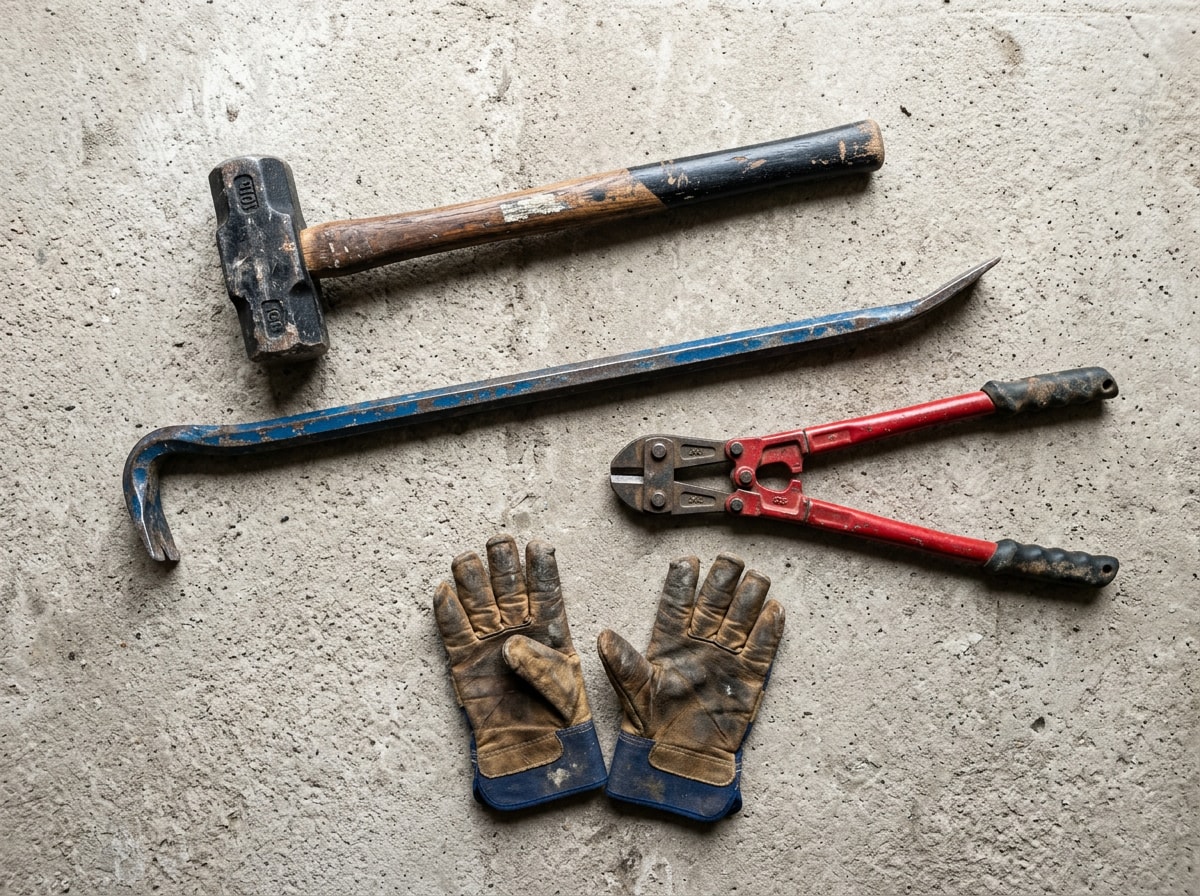
DIY concrete removal is possible for small slabs, but it rarely saves as much money as homeowners expect once rental and disposal costs are added up. The core tools are a sledgehammer, a jackhammer or electric demolition hammer, a pry bar, and bolt cutters for any embedded rebar.
Jackhammer rental typically runs $100 to $200 per day before fuel or bit replacement, and that's before a truck rental to haul debris and landfill tipping fees. Breaking concrete also generates fine silica dust. OSHA's silica standard for construction applies to all occupational exposures to respirable crystalline silica in construction work , so it's worth reviewing the agency's construction silica guidance before starting a DIY job, even a small one.
Here's a rough side-by-side for a typical 200-square-foot patio:
| Approach | Equipment/Labor | Disposal | Estimated Total |
|---|---|---|---|
| DIY | $150–$250 (rental) | $100–$200 (dump fees) | $250–$450 + your time |
| Hired contractor | Included in quote | Included in quote | $600–$1,200 |
The gap narrows fast once you add your own labor hours, physical strain, and the risk of damaging nearby structures without experience.
How to Vet a Concrete Demolition Contractor in a Small Mountain Market
Vetting matters more in a small market than a big city, where fewer contractors can mean less competitive pressure to perform well. Start by collecting at least three quotes for the same scope and disposal terms, so you're comparing apples to apples.
Colorado does not license general contracting or concrete demolition at the state level; licensing, where required, is handled city by city or county by county. That means the paperwork to check is insurance, not a state license number. Ask to see current general liability coverage directly, and ask how long they've worked in the San Luis Valley specifically.
For rural properties, ask two extra questions:
- Can their equipment actually reach your driveway or backyard given steep grades or narrow access?
- Where do they haul debris, given the area's limited landfill and recycling options?
Get a written contract spelling out a payment-milestone schedule before any work begins. If the demolition is step one of a bigger project, our grading and excavation team can also handle the site work that follows a tear-out, from regrading to drainage correction. And if you're clearing an old foundation ahead of a new build, our guide to new custom built homes in South Fork, CO walks through what comes after the slab is gone.
Concrete Cutting vs. Full Demolition
Sometimes you don't need full demolition, just a section removed. Concrete cutting is priced per linear foot, typically $4 to $15 depending on slab thickness and whether rebar needs cutting through.
Saw cutting is the go-to method for partial removal, like trimming back part of a driveway for a new walkway or removing a damaged patio section without disturbing the rest. Most contractors charge a minimum service fee for small jobs, since mobilizing a saw crew costs roughly the same whether you're cutting 10 feet or 100. Saw cuts should be timed carefully to control cracking, and should occur before random drying-shrinkage cracks form, typically within 4 to 12 hours after placing a fresh slab depending on temperature and weather , according to the American Concrete Institute, which matters if you're cutting new concrete rather than demolishing old.
The team at Whispering Pines Co serves South Fork and the surrounding San Luis Valley for both full demolition and partial cutting work.
FAQ
Can I Remove Concrete Myself?
Yes, for small slabs under roughly 100 to 150 square feet without rebar. DIY demolition gets expensive and physically demanding fast on anything larger. Revisit the tool and cost comparison above before deciding.
What Steps Do I Take Before Removing a Concrete Patio?
Protect nearby siding, windows, and landscaping with plywood or tarps before any breaking starts. Take before-photos for your records, confirm any required permits with your local building department, and have utility lines marked so crews don't hit buried gas, water, or electrical lines during prep.
Is a Permit Required When Removing a Concrete Patio?
Permit rules vary by municipality, so there's no universal answer. Confirm requirements directly with your local building department before demolition begins. Demolition permit rules in rural Colorado counties can differ from nearby towns, even ones a few miles apart.
Do Concrete Demolition Contractors in Colorado Need a State License?
No. Colorado doesn't issue a statewide contractor license for general contracting or concrete work. Licensing, where it applies, is handled locally by the city or county. Insurance coverage and local experience matter more than a license number when you're vetting a crew.
How Long Does Concrete Demolition Take?
A standard residential driveway or patio typically takes a single day for breaking, loading, and haul-off. Reinforced slabs, oversized areas, or jobs with tough equipment access can stretch to two or three days.
What Happens to the Concrete After It's Removed?
Broken concrete is loaded into a roll-off dumpster and hauled to either a landfill or a concrete recycling facility, where it can be crushed and reused as aggregate base for new construction. Ask your contractor which option they use. It can affect both cost and your project's environmental footprint.
Request a free quote and we'll help confirm what your South Fork property needs before the first swing of the breaker.