A roofing project manager in Bayfield, CO is the single point of contact who coordinates your roof replacement from the first inspection to the final walkthrough. Skip this role and you're left chasing updates from a sales rep, a crew foreman, and a supplier separately. Here's what the job actually covers, and why it matters more in Bayfield's climate than in a typical lower-elevation market.
What Does a Roofing Project Manager in Bayfield, CO Do?
A dedicated project manager owns the whole process: materials, scheduling, suppliers, and communication. That's different from a sales rep who closes the deal and moves on, or a foreman who only supervises installers for a given day.
The project manager makes sure the finished work matches your budget and specifications, including coordinating with suppliers so the right materials show up at the right time. Ask about this role before signing anything with any general contractor handling your roof, foundation, or structural work. It's one of the clearest signs of a well-run project.
Project Planning and Site Assessment Before Your Roof Replacement
Before any crew sets foot on your roof, the project manager assesses the existing roof condition and builds a project plan covering materials, labor, and timeline. That means a thorough inspection, an accurate material takeoff, and crew scheduling that assigns the right people to the right tasks at the right time.
Comprehensive Roof Inspection
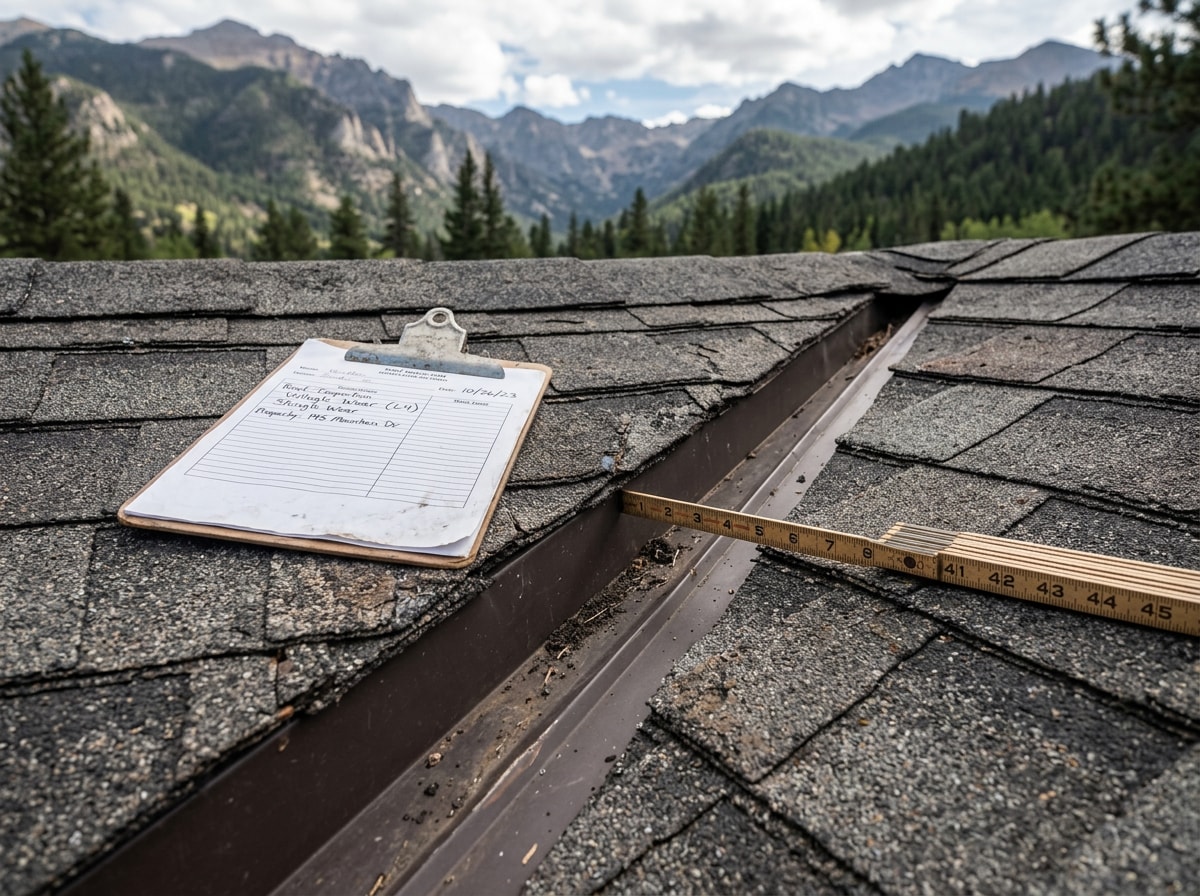
The inspection is the project manager's starting point. It's a detailed walk of the existing roof to flag wear, structural concerns, and anything that changes the scope of work before a single shingle comes off.
In Bayfield, that inspection goes further than checking for missing shingles:
- Intense high-altitude UV exposure can accelerate wear on asphalt shingles faster than at lower elevations.
- Snow-load stress along valleys, eaves, and transitions can hint at structural issues that aren't visible from the ground.
- Freeze-thaw cycles common across La Plata County leave ice-dam evidence that needs documenting before the scope of work is finalized.
That last point isn't just a local quirk. La Plata County's building code requires a minimum roof live load based on snow load tables, along with a basic wind speed of 90 MPH and an ultimate wind speed of 115 MPH , so a project manager working here has to design and document the scope against those numbers, not generic national averages. We build our inspection checklists around those specific stressors because a roof that passes code in Denver can still underperform at 7,000 feet of elevation.
How a Project Manager Keeps Your Roof Replacement on Schedule
Staying on schedule is where a dedicated project manager earns their keep. They set the timeline, confirm material delivery dates with suppliers, and line up crews so there's no gap between tear-off and installation.
Southwest Colorado adds its own wrinkles to that schedule:
- Mountain weather windows close faster here than in lower-elevation markets. An afternoon storm or early snow can shut down work for a day or more.
- Material lead times for some shingle or metal profiles run longer than homeowners expect.
- Crew availability tightens during storm season, when demand for roof repairs spikes region-wide.
A good project manager builds in buffer days for weather delays and orders materials early so a supply hiccup doesn't stall the whole job.
On-Site Oversight and Quality Control
On-site oversight ties directly to quality control. Rather than checking in once at the end, the project manager conducts quality checks at each stage: underlayment, flashing, ventilation, and final courses.
This is also where the project manager becomes your main point of contact during the install itself. If something looks off mid-project, you're calling the person who walked the roof that morning, not a sales office. You can see what that process looks like across finished jobs on our projects page.
Project Manager vs. Roofing Foreman: What's the Difference
These two roles get confused often, and on smaller crews, one person sometimes handles both. Here's the practical split:
| Responsibility | Roofing Foreman | Project Manager |
|---|---|---|
| Daily crew supervision | Yes | Occasional check-ins |
| Material ordering & supplier coordination | No | Yes |
| Client communication & scheduling | Rarely | Yes |
| Final inspection & sign-off | Sometimes | Yes |
| Budget and change-order authority | No | Yes |
If you're not sure which role you're actually getting on your job, ask directly before signing.
Safety Protocols on the Job Site
Roofing is inherently dangerous work, and enforcing safety is a core part of the project manager's job. Under 29 CFR 1926.501(b)(13), workers engaged in residential construction six feet or more above lower levels must be protected by conventional fall protection, such as guardrail systems, safety net systems, or personal fall arrest systems, or an approved alternative . A good project manager confirms crews follow that standard on every pitch, not just the steepest ones, and holds regular safety meetings so hazards get flagged before they become incidents.
Safety also extends to your property. Crews should stay clear of windows, walkways, and play areas during tear-off, and a good project manager coordinates with you on pets and kids' schedules so no one is near the work zone when materials come off the roof.
Site Clean-Up
A roof replacement doesn't end when the last shingle goes down. Clean-up happens on both ends of the job, and it's a phase that shouldn't be skipped.
Before installation: the project manager walks the property with you to flag anything worth protecting. Patio furniture, potted plants, grills, and delicate landscaping near the house typically get covered with tarps or moved out of the drop zone.
After installation: the project manager conducts a final inspection to confirm everything matches the signed contract, including correct materials, proper flashing, and clean lines at valleys and edges. Punch-list items get caught here, before the crew leaves. A final walkthrough with you closes out the job and gives you a chance to ask questions before it's marked complete.
Key Attributes of an Effective Roofing Project Manager
Strong candidates combine real industry knowledge with the habits that keep a job running smoothly. Worth asking about when vetting any contractor:
- Deep working knowledge of roofing systems, materials, and installation methods across different roof types
- Manufacturer training or trade certifications that back up their technical know-how
- Clear, consistent communication, so you know who to call and get a real answer
- Real decision-making authority on cost and timeline questions, not just a message-passer
PROCertification is a nationally recognized certification program for validating roof system installation knowledge and performance across key systems and roles , run through the National Roofing Contractors Association. It's a reasonable benchmark to ask any contractor how their project managers measure up against.
Why a Project Manager Matters for Your Home
Without a dedicated project manager, roof replacements can turn chaotic fast: missed deliveries, confused crews, and a homeowner piecing together updates from three different people. A project manager provides accountability, acting as a single advocate who owns the outcome from the first inspection to the final walkthrough.
For homeowners across Bayfield, CO, that accountability often makes the difference between a stressful few weeks and a replacement that goes mostly unnoticed. This holds for related permitted work too, as covered in our Bayfield home extension guide, where scope and code questions come up in similar ways.
The practical takeaway: when vetting any roofer for a job in this area, ask directly about their project-management process. The answer tells you a lot about what the rest of the experience will look like. If you want to talk through your own roof replacement with a team that handles this role in-house, get a free estimate or visit Whispering Pines Co. to see our full range of services.
FAQ
Do I need a project manager for my roof replacement?
A reputable roofing company should have a project manager, or a highly trained associate filling that role, to oversee the installation and answer questions as they come up. For anything beyond a small repair, dedicated oversight helps catch problems early and keeps the job accountable to one person instead of several.
What's the difference between a roofing foreman and a project manager?
A foreman manages the crew on-site day to day: assigning tasks, checking installation details, and keeping work moving. A project manager owns the bigger picture, including scheduling, material orders, client communication, and final sign-off.
Who will be on the job site during the roof installation?
Expect an installation crew handling tear-off and shingle work, plus a project manager who checks in at key stages and stays reachable if questions come up mid-project. Homeowners don't need to supervise the crew themselves; that's the project manager's job.
Does a roofing project manager cost extra on top of the roof replacement price?
Usually not as a separate line item on residential jobs. The project manager's time is typically built into the overall project price rather than billed hourly, since the coordination work is part of what you're paying the company to handle.
Does a roofing project manager handle building permits in La Plata County?
Building permits are required by La Plata County for all new structures, additions, remodels, and placement of manufactured or modular homes in unincorporated properties , and a roof replacement involving structural work or sheathing can fall under that requirement depending on scope. A good project manager confirms whether your specific job needs a permit and handles the paperwork and inspection scheduling if it does.